
Sanitary process design is not glamorous. We can’t remember one situation where someone besides us toured a food processing facility and got a thrill talking about the slope of a pipe or the surface finish on some of the equipment. Those particulars, however, are what make food manufacturing function. They’re the line between a facility that is effortlessly clean and one that’s always withstanding contamination, waste, and downtime.
HMS helps food processors, beverage manufacturers, dairies, and other processing facilities devise a production environment that is straightforward to clean, less complicated to maintain, and built with food safety as the intention.

Why Sanitary Design Matters
Sanitary design feels basic because it is, but not in the way you might suppose. The targets are simple: keep things clean, reduce food residue, moisture, bacteria, allergens, and give contaminants no quarter. Hitting the bullseye in ways that lead to success is where it gets complex, especially if we’re trying to undo years of poorly designed seams, dead legs, and hollow areas.
Principles of Hygienic Design
Surfaces are one of your biggest enemies when it comes to preserving a sanitary environment. It’s a requirement for them to be smooth, non-porous, corrosion-resistant, and compatible with the cleaning chemicals used in your plant. Stainless steel AISI-304 is frequently used for food processing equipment, while AISI-316 or AISI-316L may be a better fit in acidic surroundings or harsher processing atmospheres. It doesn’t take much with food and beverage processing equipment to have a big problem on your hands.
Equipment Design for Cleanability
Real life in food manufacturing sometimes doesn’t look the way we would choose. The equipment, if it isn’t designed for easy cleanability, can be taken care of with an inattention to detail. Not even because staff is lazy, but because production is pressuring them for results, and taking the entire thing apart just isn’t in the cards. This is exactly why it’s so vital that we have equipment that’s designed for a proper cleaning without going through a major teardown every week.
Eliminating Dead Legs in Piping
Everyone talks about dead legs all the time. That would be because they’re not as harmless as they are common. A dead leg is a spot of piping that doesn’t move product appropriately. Because product stalls, bacteria grow, moisture holds, and quality languishes. To bring it back around to the start, this is why we get excited talking about slopes. Specific slopes in sanitary piping aid in draining product and wash fluids so that it all ends up where they belong.
Facility-Level Sanitary Design
If you’ll join us, we’ll zoom out for a minute. Raw material areas, allergen zones, open product areas, packaging areas, finished product storage, and employee traffic routes – it all has to jibe. All the hygienically designed equipment in the world can’t help you if your facility can’t accommodate cleanliness.
Airflow, Moisture, and Drains
Moisture plus food contact surface equals bad news for those people trying to meet sanitary design requirements. More goes into it you might have thought, including floors, drains, walls, ceilings, HVAC systems, and (of course) production equipment.
Drains are a branch of the same conversation. They have to be sized and routed correctly, or they’re just holes in the floor that serve no purpose. All the grime has to flow from cleanest to dirtiest.
Product operations have to be guarded from disastrous airflow conditions. Depending on the facility, differential pressures, filtration, and sanitation controls may need to be judged during facility design.
CIP vs COP
Though they mean different things, Clean-In-Place and Clean-Out-of-Place both have their functions.
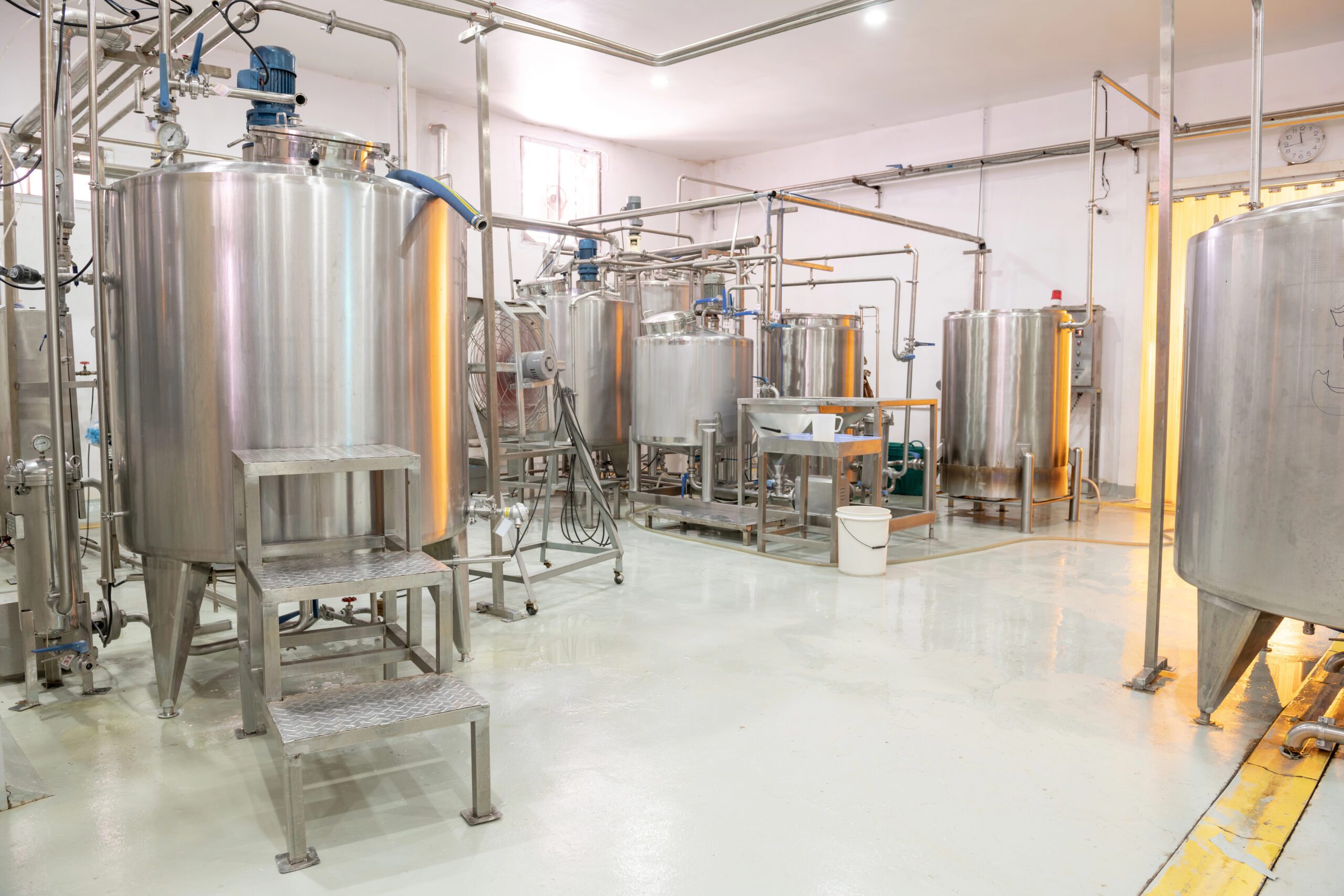
CIP systems permit automated cleaning without breaking everything down into base components. They are commonly used for piping, tanks, and enclosed processing equipment where cleaning chemicals, water, heat, and flow can reach the internal surfaces properly.
COP requires manual cleaning and disassembly. It is often used for parts, utensils, small components, and equipment that cannot be cleaned properly in place.
By nature, neither one is automatically better. The right answer depends on the product, equipment design, residue, and sanitation requirements. What is most paramount is proving that your cleaning process works. That may include ATP testing, microbial testing, visual inspection, allergen checks, temperature records, chemical concentration checks, and corrective actions when sanitation fails, all of which we can happily assist you with.
What We Look At First
A sanitary process design review usually starts with the obvious bullet points, but we don’t stop there. We go deeper, in such a way that your equipment manufacturers and water treatment teams will be wondering why you suddenly care about minute details.
The desire of our sanitary process design team isn’t to see you knuckle down with a full facility redesign, even though that’s required sometimes. We want to present you with a plan that will make the most of what you already have and help you achieve the great things you always knew your business was capable of.