Consumer behavior shifts and tariffs are introducing new challenges into winemaking, pushing operators into new worlds. Current operators walk a fine line between creativity and efficiency.
It’s a line we are experts at walking. The ability to innovate and optimize production lines provides agility in a currently challenging market.
We’re here to guide our clients to success.
Whether working with a new winery or an established one, we specialize in the construction and expansion of winery production facilities, helping our partners optimize, expand, and adapt.
The right know-how is necessary because wine facilities face unique challenges in caustic environments.
Designs and layouts are especially important as these producers require specialized production areas and barrel storage while also doubling as retail spaces, social spots, and eateries.
Winery footprints vary greatly. We base our designs on each client’s specific production goals and existing infrastructure, including capacity and retail considerations, such as how much wine a company is forecast to sell.
A mindfully planned building orientation also allows our clients to meet climate goals.
In addition to enacting more efficient in-house processes by modifying layouts, we can help reduce emissions by optimizing energy use. One way to do so is through a south-facing building orientation, which exploits passive heating and cooling processes.
Additionally, wineries must have a defined separation of production space and hospitality zones.
Sanitation and customer comfort are both dependent on proper planning to divide noisy, busy production zones from hospitality areas, including tasting rooms, restaurants, and retail sections. After all, the customer experience depends on comfort and efficient service.
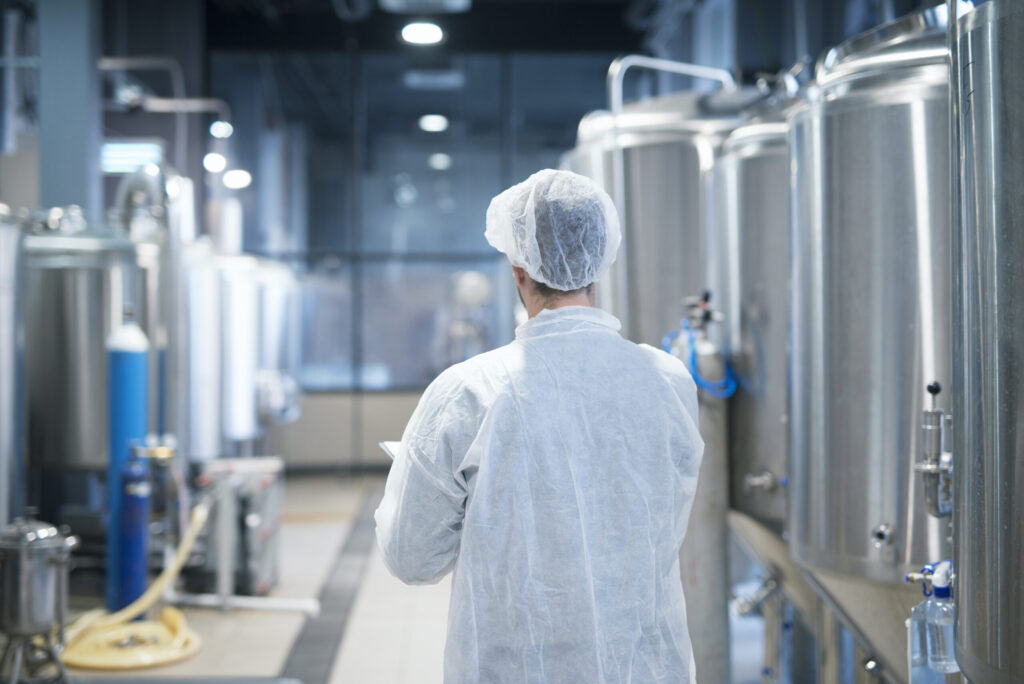
We often focus on stainless-steel-based winery construction services for improved hygiene and easier cleaning. Additionally, stainless steel construction for fermenters and other vessels minimizes oxygen exposure, preserving the natural flavors and colors.
For smooth, stress-free renovations, with work with your current general contractors to maintain your aesthetics and workflows.
An exceptional wine begins with exceptional grapes, which must be precisely processed through unerring reception and handling practices.
A proper production layout that streamlines flow between industrial conveyors, hopper systems, and screw feeders is therefore invaluable to anchor operations.
Sorting and de-stemming are among the first steps in winemaking, setting an essential foundation for reds, whites, and velvety varietals. Accordingly, our clients improve early-stage operations by incorporating state-of-the-art winery equipment used to remove debris and select the finest grapes.
This is done via optical sorting systems that utilize visible light and infrared cameras to remove substandard fruit. Afterward, crush pad technologies like mechanical crusher-and-de-stemmer machines provide automated capacities of up to 20 tons per hour.
Our partnering wineries often optimize juice yield by employing large-scale pneumatic presses, or membrane presses, which use air-filled bladders to gently press grapes. Gentle action helps avoid bitter compounds and harsh, headache-causing tannins.
Presses accelerate flow through automation, utilizing programmable, customized pressing cycles aligned with winemakers’ distinctive needs.
Storage tanks must also be scaled to match each client’s production capacity and goals while allowing for market growth.
Invaluable features include automated temperature-control devices, like glycol cooling systems (i.e., “jackets”) that wrap around tanks and lower temperatures by pumping a cooling mix of water and glycol.
Programmable rotary fermenters offer a gentle rotating action to prevent the generation of off-tasting compounds, yielding uncompromising color and flavor every time via hands-off automated processes.
Winery layouts should include strategically designed pumping and movement flows. Mindful movement patterns prevent backtracking and minimize cross-contamination risks as finished wines and other liquids, like grape must, are transported between vessels and storage tanks.
Before wine can be bottled, it must be filtered to remove suspended insoluble particles like proteins, dead yeast cells, and other organic matter.
Vintners use Filtration and clarification equipment, such as plate and frame filters, vacuum filters, and cross-flow filters to clarify large volumes of wine.
Automated bottling lines, such as Monoblock systems, optimize an otherwise laborious process. These technologies streamline bottle rinsing, oxygen-free filling, and corking or capping.
Such automated systems are highly hygienic and efficient, allowing small-to-large wineries to optimize operations by processing thousands of bottles per hour.
Adding the finishing touches on a bottle of fine wine doesn’t require time-or-labor intensive processes, thanks to automated, pressure-sensitive labelers and capsule dispensers.
Such systems can place front and back labels on thousands of wine bottles per hour. They also offer scalable options, such as rotating carousel-based capsule dispensers, for both boutique wineries as well as high-quantity industrial producers.
Wineries must be bonded, or authorized via the Tobacco Tax and Trade Bureau (TTB), the vital federal agency that oversees winemaking regulations in the USA. Any winery facility must therefore comply with strict record-keeping reports, including those regarding labeling, production, and tax payments.
Wineries, breweries, and associated alcohol producers are classified by the US Food and Drug Administration (FDA) as food facilities. This mandates that they renew their FDA registration every even-numbered year.
Wineries must also adhere to strict regulations set by the FDA’s Food Safety Modernization Act (FSMA), as well as Current Good Manufacturing Practices (cGMP).
These regulations focus on employee training, hygiene, and pest control. As such, we help them maintain the necessary logs detailing food safety procedures.
Explain your Engineering Challenges and We’ll have a Team Member Connect!
HACCP, SQF & regulatory-aligned from day one.
We modernize old factories or design from scratch.
Nationwide sanitary welding & commissioning support.