Clean-in-Place systems have been around since the 1950s. Today, we constantly walk into facilities where they are not being used, being underused, and being used in a manner that slows production.
A clean-in-place system is an automated method for cleaning the interior surfaces of sanitary equipment. Commonly, they are used to clean the insides of tanks, piping, valves, heat exchangers, and other process equipment without taking the line apart.
For the food and beverage industry, this typically reduces downtime. It also improves quality assurance, makes the cleaning process repeatable, and — most importantly — delivers consistent results that are easier to document.
Our specialty is solving those stubborn CIP problems that you might have chased for a while. If your staff keeps saying “CIP does not work,” we’ve seen time and time again that the issue just needs an outside perspective to find and fix whatever is holding you back.
We’ve had moments where a few part swaps dramatically improve performance. We’ve had other times when bigger redesigns or equipment replacement is required. We’ve seen both extremes and everything in between, which gives us the confidence to ask you to bring us your most difficult problems so we can solve them.
Everything starts with an exploration call to map the issue and priorities. We want to understand your challenges at a high level. This helps us scope the size of the audit needed.
During our audit, we’ll review the product, process, schedule, and your failure symptoms. We also evaluate the full cleaning path. CIP systems are interconnected — a single pump, valve, spray device, instrument, recipe step, or control logic issue can compromise the entire cleaning cycle. Sometimes the problem is inside the CIP process. Sometimes we find the problem in the layout, or even in the training documentation.
After the audit, Hygienic Manufacturing Solutions can tune the existing system, retrofit the line, correct programming, update procedures, or, if needed, build a custom clean-in-place skid (or even sometimes modify or reprogram an existing skid).
Many clients contact us after failed efforts from other consultants. Most other companies approach it as a math or chemical problem. Because we got our start working in factories, we tend to have a more pragmatic approach that leads to sustainable solutions.
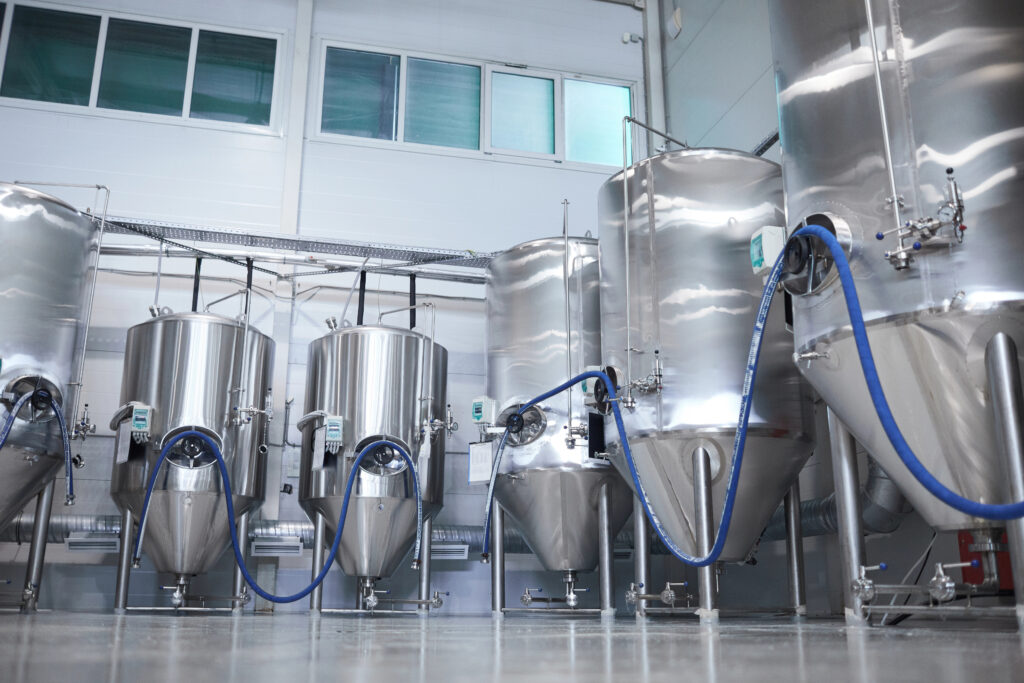
Clean-in-place improves uptime by reducing the need for disassembly and manual cleaning. In simple terms, CIP systems circulate water, detergent, acid, sanitizer, and then rinse water through the same routes that the product took.
“An automated method for cleaning food-processing equipment without disassembly using validated procedures.”
The trade-off between Clean Out-of-Place (COP) and Clean-in-Place (CIP) is consistency. A hand-cleaned part may be capable of a cleaner outcome some of the time, but it requires labor, and the cleanliness of the product depends on the staff’s level of training and conscientiousness. Even the best sanitation crew can have off-days.
Automated systems reduce those burdens but require more engineering and instrumentation during the design-and-build phase.
A typical CIP cycle starts with product recovery or drain-down to clear the lines of product. Then the cycle begins with a pre-rinse, caustic wash, and intermediate rinse. Some cycles might call for an acid wash before going to the final rinse, sanitizing rinse, and documentation. Not every plant needs every step, but the cleaning recipe you use will match the product soil, equipment design, and sanitation target.
The critical parameters are temperature, flow, chemical concentration, and contact time. Often, this is communicated with the acronym TACT, which stands for Time, Action (meaning turbulent flow in a pipe or fluid impingement from a spray device inside a vessel), Chemical, and Temperature. Typically, increasing any one of these decreases the others. Conversely, if you need to decrease one — usually it’s time, because shorter cleaning time is almost always better for plant production schedules — then you must increase the others. Shorter overall time often requires higher temps, higher chemical percentage, and higher flow rates. If you make the cleaning cycle longer, you can usually decrease the chemical percentage, lower the flow rate, and lower the temperature to achieve similar results.
fps target velocity to fully fill vertical pipes and avoid laminar flow
OSU Extension also emphasizes pressure and maintenance, and notes that turbulent flow helps clean pipelines by creating hydraulic scrubbing action. Normal product flow might be as much as ten times slower for many reasons, not the least of which is protecting product integrity. During CIP, the goal is that the system be capable of introducing turbulence during the cleaning cycle, which is where many designs fail — often due to poor valve programming, PD pumps that run too slow, or variable piping size geometry that only provides sufficient velocity in smaller line sizes while leaving the larger-sized pipes under-fed.
If one variable is too low, effective cleaning may fail; if variables are too high, the plant may waste water, energy, and cleaning solutions, and even damage the plant equipment.
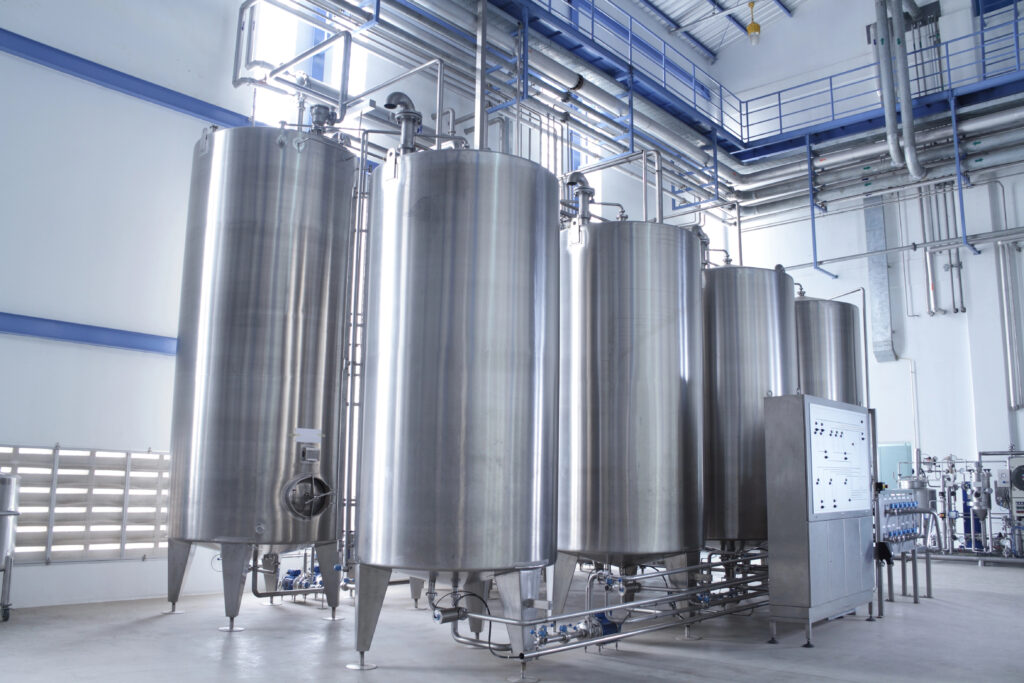
Common cleaning solutions include water rinses, alkaline (caustic) detergents for organic soil removal, acid cleaners for mineral scale and deposit removal, sanitizers, and occasional enzyme products for specialized soils. In many hygienic processing systems, acid cleaning cycles also help neutralize residual alkalinity from prior caustic washes while supporting long-term equipment cleanliness and passivation.
Caustic cleaning solutions are often used for organic residues, while acidic washes help address mineral deposits such as milkstone or beer stone (stubborn mineral build-ups left by milk or beer).
Sanitizers should be selected according to the type of cleaning needed. The type of product being removed, the surface being cleaned, and other items such as the wastewater limits can affect the final cleaning plan.
Conductivity-based dosing is the most common way to automate the management of chemical concentration. Conductivity transmitters help confirm detergent or acid strength to get the right cleaning action with the least waste.
A CIP skid typically includes supply and return pumps. They also have the chemical tanks, heat exchangers, valves, flow meters, temperature sensors, pressure instruments, conductivity probes, chemical feed equipment, controls, and data recording, all mounted in one skid that can be installed as a complete module. Since these components are packaged together in a single skid, they offer easier installation and management.
Type I single-use CIP systems send liquids to drain after use, which can simplify operation but increase water and chemical use.
Type II recirculating systems recover and reuse selected cleaning solutions, which can reduce utility costs. Type II systems require more controls and validation.
CIP skids may use a single supply or have multiple supply circuits. The skid supplies cleaning solutions, while the process loops being cleaned are routed through the plant’s piping and control architecture. Depending on the system design, a single skid will usually service many process circuits over time. Most CIP skids are either single-supply or dual-supply skids — dual supply is capable of cleaning two separate circuits simultaneously. Hygienic Manufacturing Solutions designs and builds CIP skids.
The right method depends on the surface, the soil, and whether the equipment was engineered to be cleaned in place at all.
Tank cleaning needs coverage with sufficient force across the interior surfaces. Static spray balls can work for light soils, while rotary jets provide stronger mechanical action. We find that rotary jets are needed for better coverage and removal of harder residues.
Pipe cleaning relies on turbulent flow. In a properly engineered clean-in-place route, pump velocity creates scrubbing action against the pipe wall and moves soils out of the line. The challenge with cleaning pipes is avoiding dead legs, undersized pumps, trapped air, poor drainability, and incorrect valve sequencing; all of these things can create vulnerabilities in cleaning.
For individual pieces of equipment like pumps, valves, heat exchangers, and others, the manufacturer’s design will determine whether the equipment is capable of being cleaned during a CIP cycle. For a system to qualify as CIPable, each piece of equipment in a circuit needs to be capable of being cleaned in a CIP wash. Typical best practice includes sizing the equipment similarly to the lines that lead to and from it, so that a similar flow rate and pressure can clean it along with the lines surrounding it.
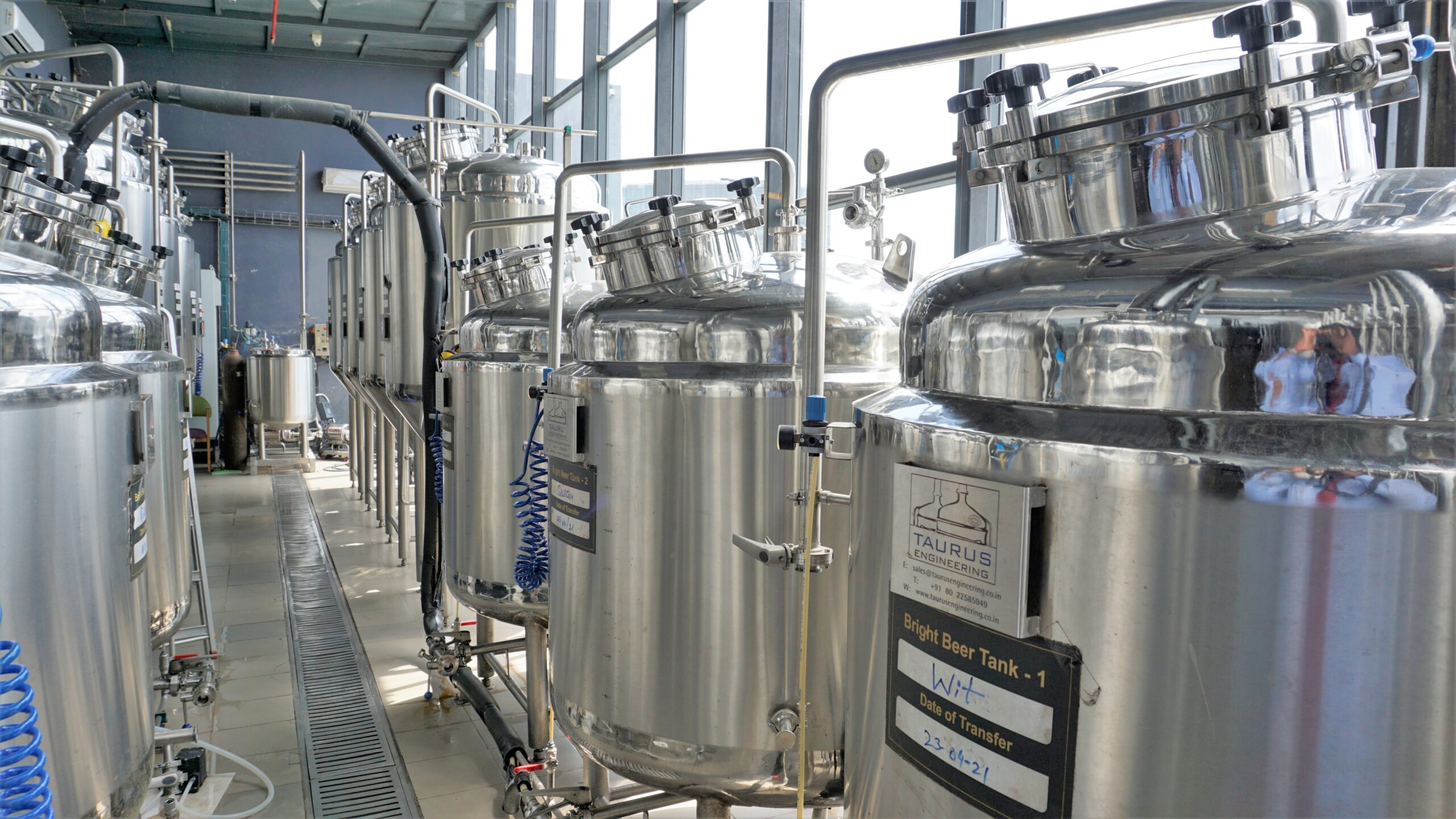
A CIP skid typically includes supply and return pumps. They also have the chemical tanks, heat exchangers, valves, flow meters, temperature sensors, pressure instruments, conductivity probes, chemical feed equipment, controls, and data recording, all mounted in one skid that can be installed as a complete module. Since these components are packaged together in a single skid, they offer easier installation and management.
Clean out of place, or COP, means removing parts and washing them in a separate sink, tank, washer, or cabinet. COP is useful for small parts, gaskets, hoses, fittings, valve components, filler nozzles, utensils, and items that are not designed to be sufficiently cleaned by clean-in-place flow.
The advantage of CIP is predictable cleaning of enclosed systems with less disassembly and less downtime. Additionally, mistakes tend to be lessened greatly — both mistakes of omission, where a critical part is overlooked and doesn’t get cleaned, as well as simple errors in reassembly or cleaning.
Whether you need a retrofit, modular skid, or new installation, Hygienic Manufacturing Solutions can identify the bottleneck, recommend the right cleaning solutions, and help implement a clean-in-place system that works in real plant conditions.
Explain your Engineering Challenges and We’ll have a Team Member Connect!
HACCP, SQF & regulatory-aligned from day one.
We modernize old factories or design from scratch.
Nationwide sanitary welding & commissioning support.