Pasteurization is one of the most important steps in dairy production. Federal dairy standards are largely built around the Pasteurized Milk Ordinance for good reason: proper pasteurization is considered to be foundational to a safe product.No matter what you’re producing, be it milk, cream, cheese, yogurt, or other dairy products, the right dairy pasteurization system is necessary. Food safety, product quality, and efficient production are all outcomes of a good pasteurization system.
Choosing the right equipment can influence your entire product line. Different pasteurization systems can influence flavor, product shelf life, determine your costs, and affect production. Beyond that, the wrong system could create bottlenecks, increase energy consumption, or even make the flavor of your pasteurized milk or dairy products taste wrong.
At HMS, we work with dairy processors all the time to select equipment that fits specific production goals, existing facility layouts, and product lists. Our goal is simple: make milk safe, eliminate harmful bacteria, and maintain the quality your customers expect. The idea of pasteurization is simple: hit target temperature, hold it for an appropriate amount of time, then cool it back down – and legally record the process. While it may be simple in theory, that doesn’t mean it’s easy.
While both kinds of systems, continuous and batch, accomplish the same objective, each has different advantages depending on production volume, available space, and the finished product that is being produced.
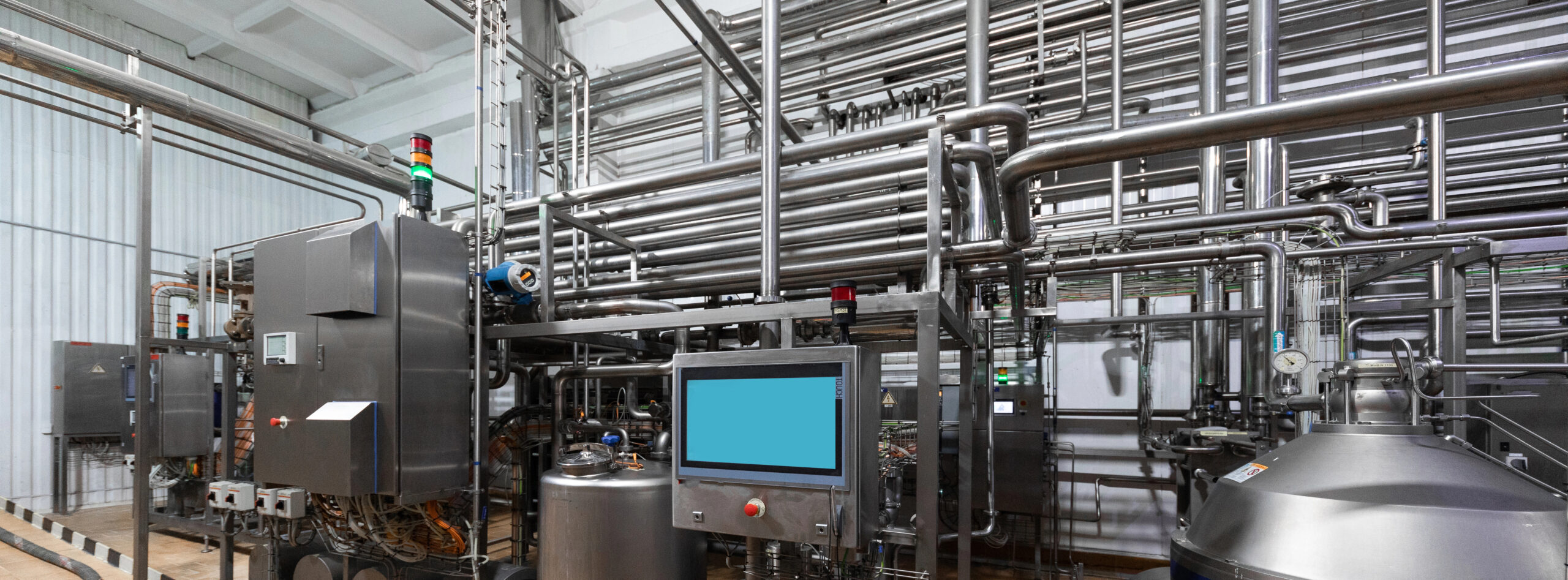
Choosing the right equipment for your dairy depends on the production capacity you want, temperature requirements for the products you choose, plant efficiency (always), and your growth plans for the future.
Batch pasteurizers use insulated vat or jacketed-tank designs that slowly heat raw milk to the temperature you choose before holding it for as long as is required for your chosen product. The milk is then cooled as quickly as possible to preserve the quality you worked so hard for – and to prepare the dairy for the next steps.
Because they allow for flexibility between production runs, these systems are often preferred by artisan cheese makers, micro dairy plants, cream producers, and specialty food manufacturers.
They also fit in nicely because batch systems usually require a smaller footprint than one of the larger continuous systems. This makes them a nice addition to the process for small to medium facilities. They also make it easier to produce multiple specialty products without dedicating an entire processing line to a single product.
HTST pasteurization (or “high-temperature short-time”) is the most common method used in the larger dairy industry, specifically for fluid milk production.
During pasteurization, milk is quickly heated to the required temperatures, held there for the required time, and then immediately cooled. This rapid heating/cooling process destroys pathogens and eliminates harmful bacteria while preserving the dairy’s quality, nutritional value, and most of the flavor.
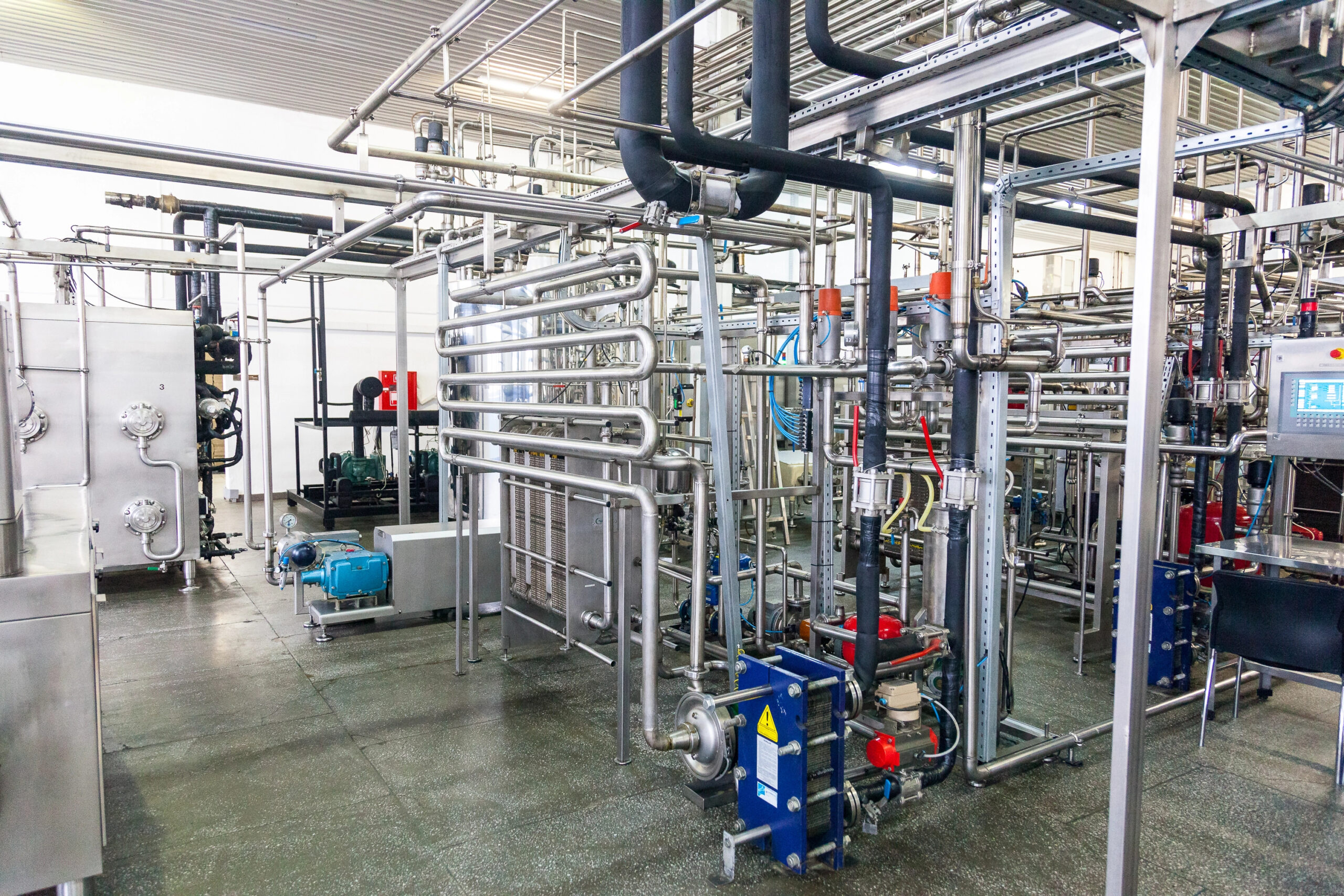
Most HTST pasteurization systems rely on plate heat exchangers (also called gasketed plate heat exchangers or “GPHE”) for efficient heat transfer. Don’t know what those are? We’re here to explain it.
A plate heat exchanger is made up of multiple thin stainless steel plates that are arranged to maximize heat transfer between hot water and milk without letting the two fluids mix. Here’s an example: Raw milk flows through one side of the heat exchanger plates, and heated water, chilled water, or already-pasteurized milk flows through the other side of the plates.
Because the thin, tightly packed plates give a massive amount of heat transfer area in a small footprint, heat moves quickly between the fluids. IN an HTST system, this will often allow incoming raw milk to be preheated by outgoing pasteurized milk, then brought to final pasteurization temp using hot water, and then cooled before filling.
The primary advantage of a GPHE is its compact size compared to its efficiency. Some manufacturers claim as much as a 5x greater heat transfer efficiency when compared to traditional shell and tube heat exchangers. That being said, heat exchanger application is highly application-specific. There are times plate and frame heat exchangers aren’t the right choice. We’ll talk more about the main alternative below.
While plate heat exchangers work great for liquid milk, some dairy products may require different equipment. The next topic of discussion is tubular heat exchangers.
Tubular heat exchangers, often called ‘shell and tube heat exchangers’ are often chosen by dairy masters for products containing higher total solids, larger particles, or greater viscosity. Think yogurt bases, cream products, and certain cheeses. Tubular systems can handle higher pressure and thicker products without putting too much strain on the equipment or hurting the dairy itself.
Which heat exchanger you choose depends on which products you’re processing and the overall goals of your dairy processing operation.
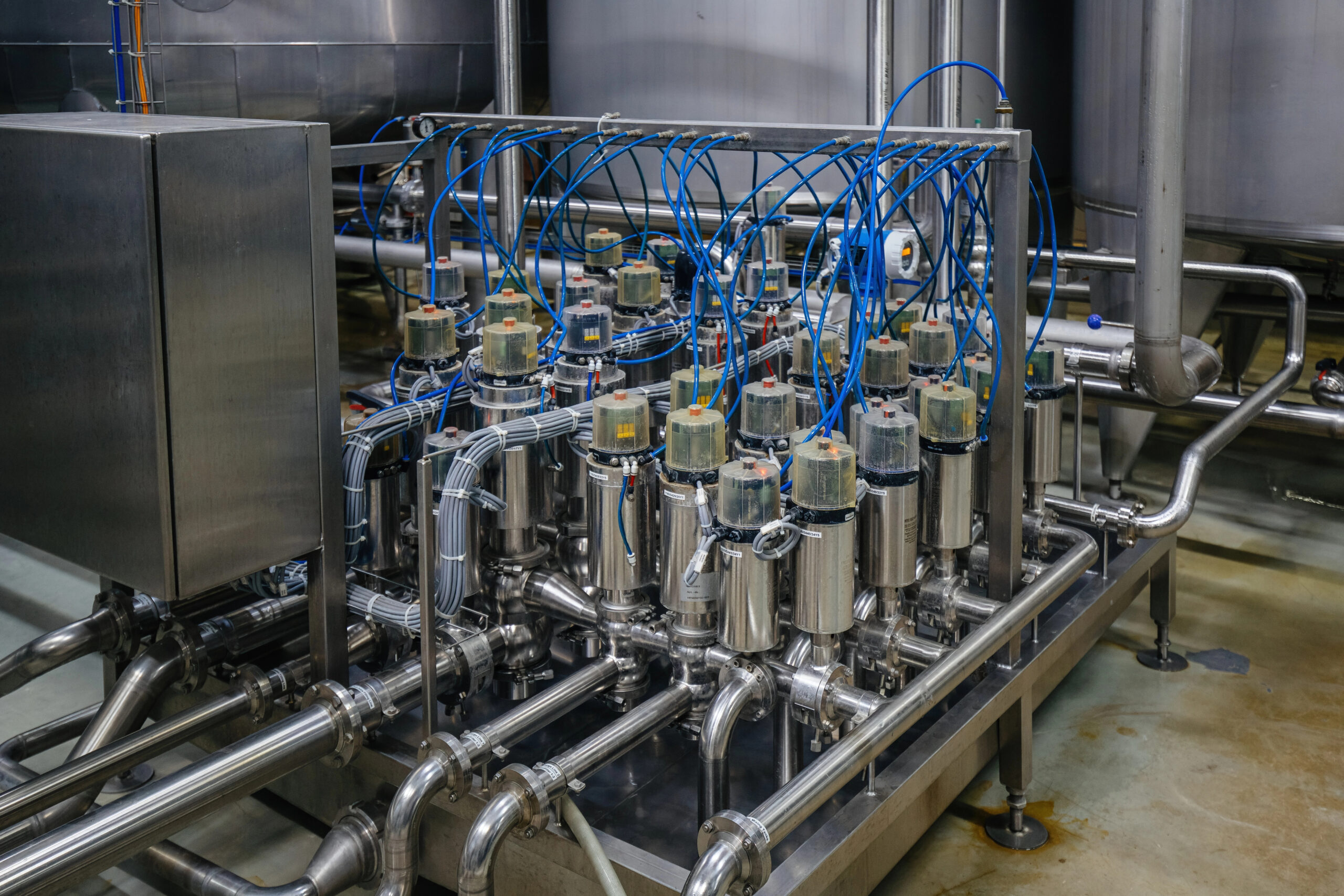
Flow control devices play an important role in HTST pasteurization processes. Their job is to regulate the flow of the product. You can probably see why this is important. This helps milk stay in the holding section long enough to reach the necessary time-and-temperature treatment.
This matters because pasteurization is not simply about reaching a target temperature. The product must also remain at or above that temperature for the required amount of time. If flow moves too quickly, the milk may pass through the holding section before it has received the full legal pasteurization treatment.
Additionally, HTST systems must include a flow diversion system. If the product doesn’t meet the required pasteurization temp or hold time, the system must automatically divert it away from the pasteurized side of the process back to the raw side for reprocessing.
Temperature sensors located inside the sensing chamber are always on, continuously monitoring that the right temperature has been reached before the product moves to the hold tubes and then into the pasteurized side of the system. You need accurate monitoring so that you can confidently maintain food safety while protecting the consistency of the finished product.
The hold section, also generally called hold tube or holding tubes, is designed to hold the product at the required pasteurization temperature for the appropriate amount of time. These can be executed in many different configurations and form factors, but the key is that they keep the hot, pasteurizing product at temperature for a set amount of time to ensure an appropriate level of biological log kill to ensure compliance with dairy standards.
Because flow rate, temperature, diversion, and holding time are all directly tied to food safety, HTST control systems are among the most tightly regulated systems in food production. Whether the system uses electronic controls or a traditional chart recorder, the time-and-temperature records, control settings, and diversion functions must be properly validated, secured, and maintained in accordance with the applicable dairy regulations.
Clean-in-place (CIP) systems are fully integrated into modern pasteurization equipment. Rather than disassembling equipment after every production run, automated cleaning cycles circulate cleaning solutions through tanks, piping, heat exchangers, and processing systems.
Well-designed CIP systems improve maintenance, reduce production interruptions, support food safety, and help keep pasteurization equipment operating efficiently day after day.
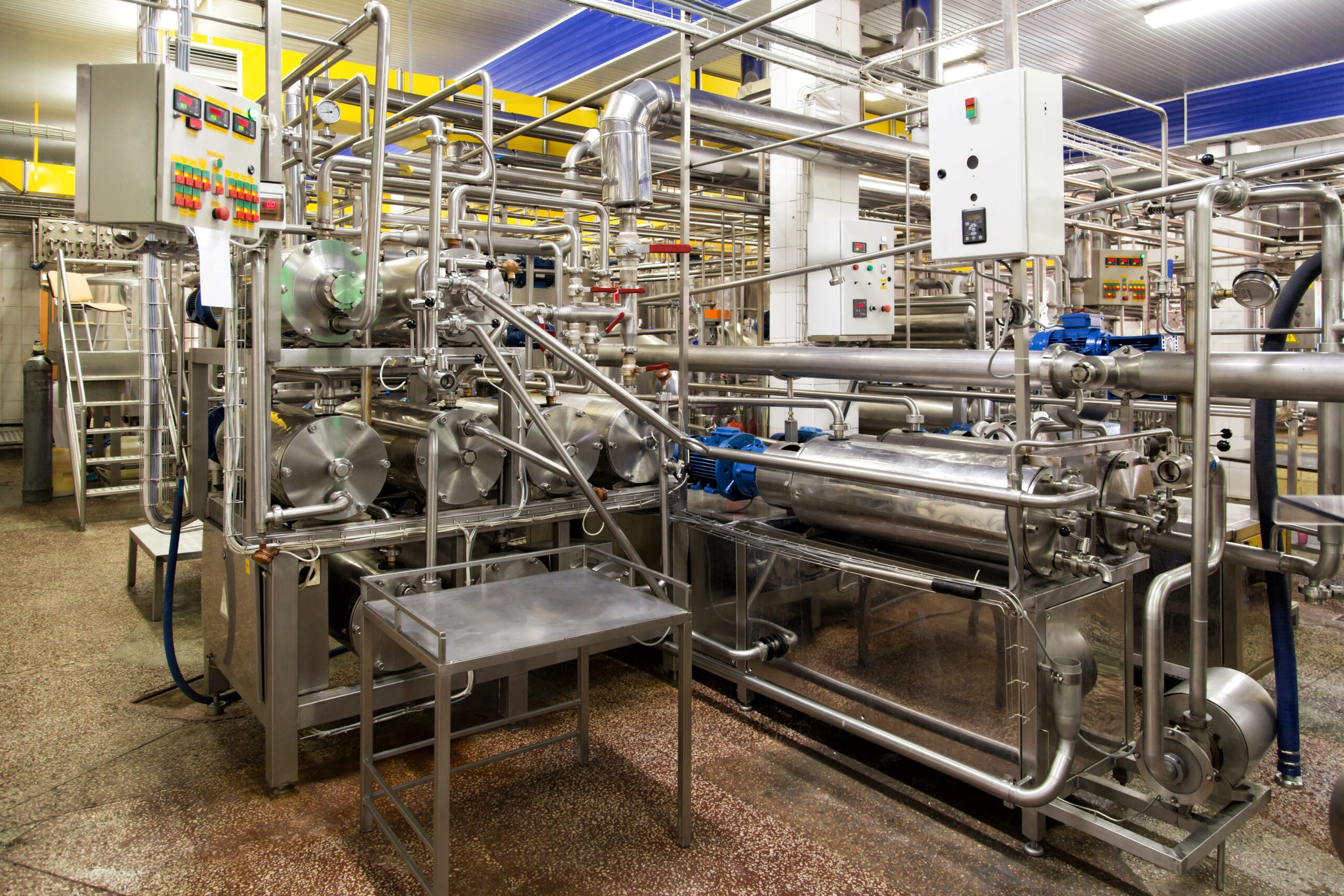
Whether you’re expanding an existing dairy processing facility or building a new production line, HMS can help you select the right equipment for your specific needs. We’ll work with you to design a pasteurization system that fits your production goals, protects product quality, and supports efficient, reliable operations for years to come.
Explain your Engineering Challenges and We’ll have a Team Member Connect!
HACCP, SQF & regulatory-aligned from day one.
We modernize old factories or design from scratch.
Nationwide sanitary welding & commissioning support.